Improving discoverability, navigation, and conversion through a geo-intelligent UX system
client
FNP
year
2024
timeframe
3 Weeks
UI
UX
Problem
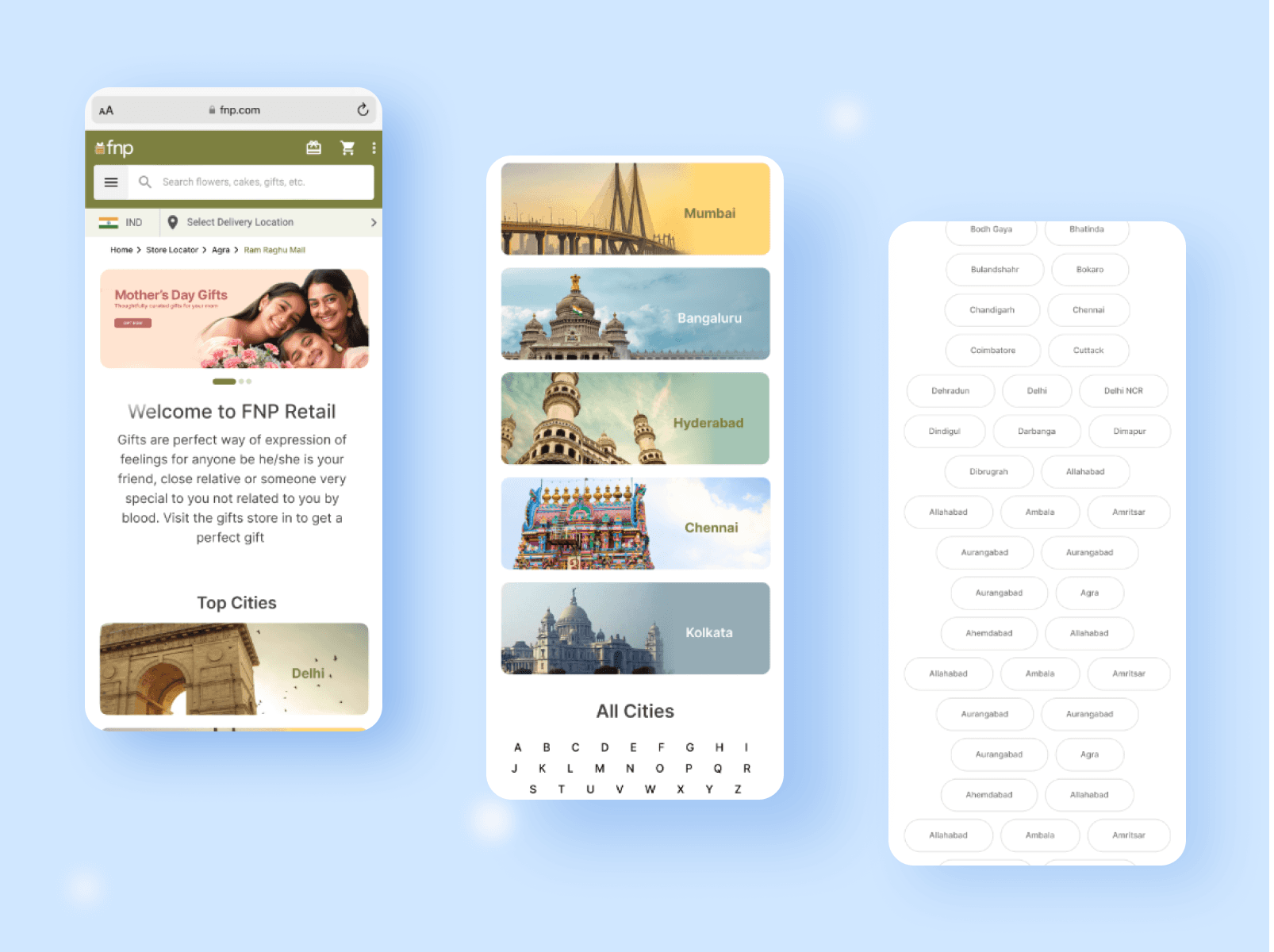
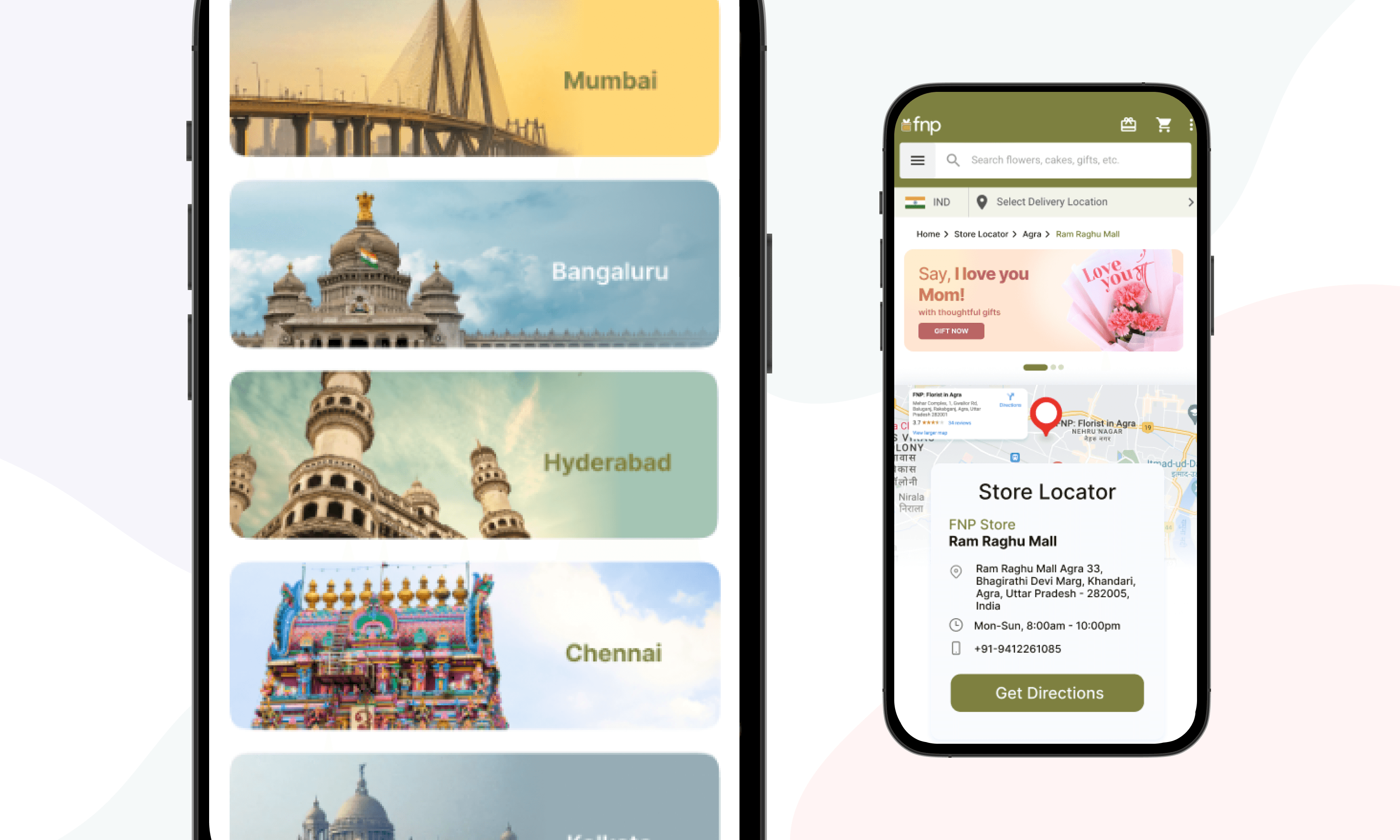
Challenge FNP operates a large network of retail flower and gifting stores across India, including COCO, FOFO, and FOCO formats. Users typically arrive with high intent, searching for nearby stores for urgent purchases or deliveries. However, the existing store locator experience had critical gaps: • Users landed on isolated store pages with no clear next action • Navigation between nearby stores or alternative inventory options was missing • Many stores had limited inventory, but nearby dark stores were not surfaced • UI felt outdated and lacked hierarchy • Poor SEO structure led to weak discoverability for geo-based searches • No structured path to redirect users back to the homepage for upselling The system covered 120+ serviceable pin codes, yet behaved like disconnected fragments instead of a cohesive experience. Task: Design a scalable, SEO-friendly, and conversion-driven store discovery experience that: • Enables users to quickly find the most relevant store (based on location and need) • Improves navigation across nearby stores and pin codes • Bridges the gap between offline store discovery and online purchase flow • Introduces structured upsell opportunities • Works efficiently across both metro and non-metro cities Action: 1. Reframed the Problem Instead of treating this as a “store locator,” the problem was reframed as: “How might we build a geo-intelligent discovery system that connects user intent → store availability → purchase journey?” ⸻ 2. Redesigned Information Architecture • Created a hierarchical structure: • State → City → Area / Pin Code → Store Page • Enabled logical drill-down navigation • Introduced interlinking between nearby stores and dark stores This eliminated dead-ends and created a continuous browsing loop. ⸻ 3. SEO-Driven Page Strategy • Built indexable city and store-level pages • Mapped search intent to landing pages This significantly improved organic discoverability and intent matching. 4. Split-Screen UX for Discovery A dual-pane layout was introduced: • Left Panel • Pin code, city, and state filters • Structured navigation hierarchy • Right Panel • Google Maps integration • Visual spatial understanding of store locations This reduced cognitive load and improved decision-making speed. ⸻ 5. Metro vs Non-Metro Optimization • Created differentiated logic for: • Metro cities with dense store clusters • Non-metro cities with sparse distribution This ensured relevance and avoided overwhelming users. 6. Inventory Awareness & Alternatives • Highlighted nearby stores and dark stores within the same vicinity • Reduced failure cases where users contacted stores without required products • Enabled smarter store selection ⸻ 7. Conversion Layer (Upsell Integration) Two key interventions: • Top Banner • Promoted ongoing campaigns and offers • Created a direct bridge to the homepage • Trending / Category Section • Surfaced popular gifting categories • Encouraged cross-selling beyond store discovery ⸻ 8. UI Modernization • Clean, structured layout with improved hierarchy • Better typography and spacing for readability • Clear CTAs for call, navigation, and exploration
Solution
Experience Improvements • Eliminated dead-end journeys • Enabled seamless navigation across stores and pin codes • Reduced user frustration due to inventory mismatch • Created a continuous discovery loop instead of isolated pages Business Impact (Expected & Strategic) • Increased organic traffic through geo-targeted SEO pages • Improved store page engagement and dwell time • Higher conversion potential via homepage redirection • Boost in cross-selling through category exposure • Better utilization of dark stores Design Impact • Transformed a static directory into a dynamic discovery ecosystem • Built a scalable system that can expand beyond 120+ pin codes • Established a strong foundation for future features like: • Real-time inventory visibility • Delivery ETA integration • AI-based store recommendations
Experience Improvements • Eliminated dead-end journeys • Enabled seamless navigation across stores and pin codes • Reduced user frustration due to inventory mismatch • Created a continuous discovery loop instead of isolated pages ⸻ Business Impact (Expected & Strategic) • Increased organic traffic through geo-targeted SEO pages • Improved store page engagement and dwell time • Higher conversion potential via homepage redirection • Boost in cross-selling through category exposure • Better utilization of dark stores ⸻ Design Impact • Transformed a static directory into a dynamic discovery ecosystem • Built a scalable system that can expand beyond 120+ pin codes • Established a strong foundation for future features like: • Real-time inventory visibility • Delivery ETA integration • AI-based store recommendations